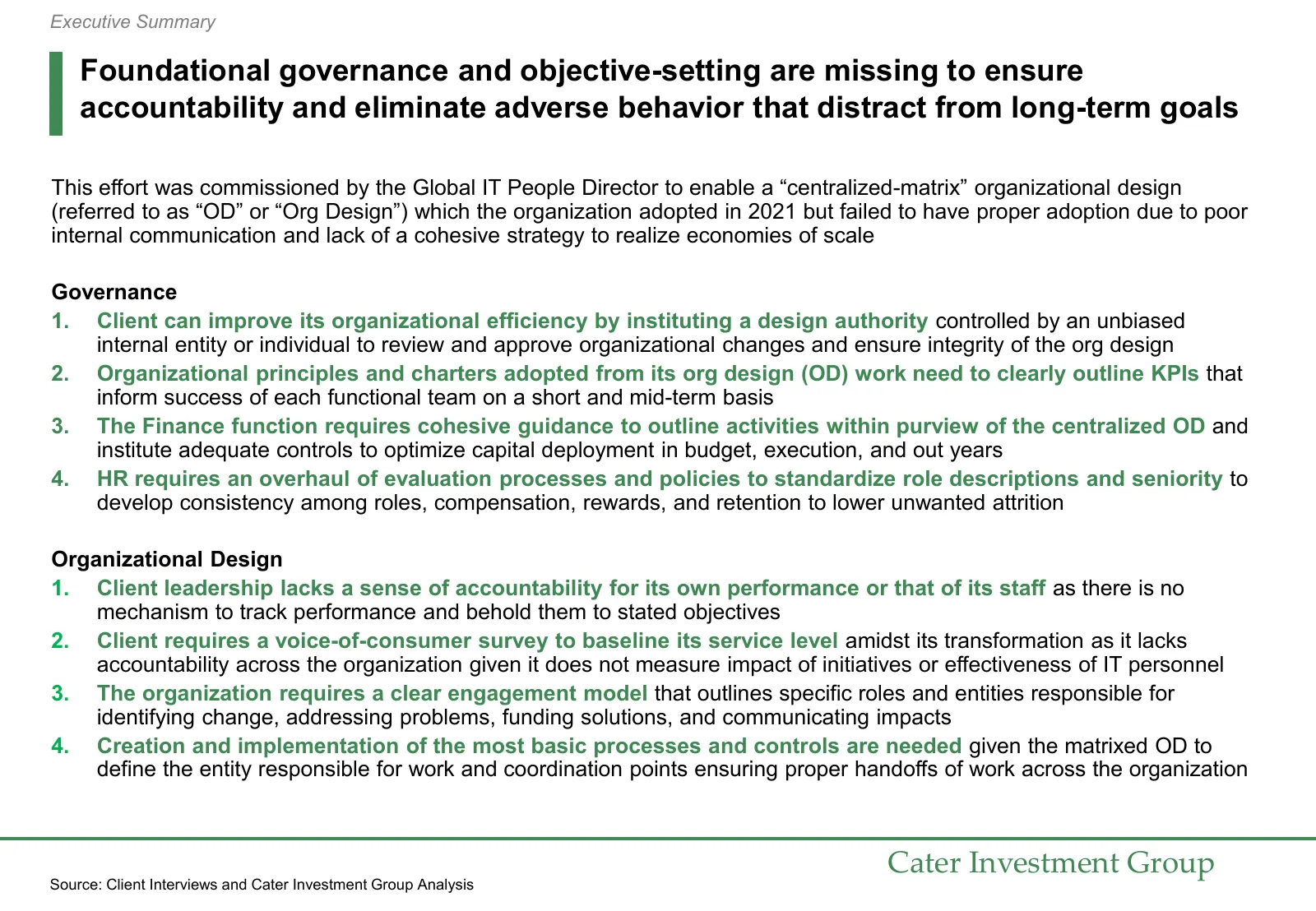
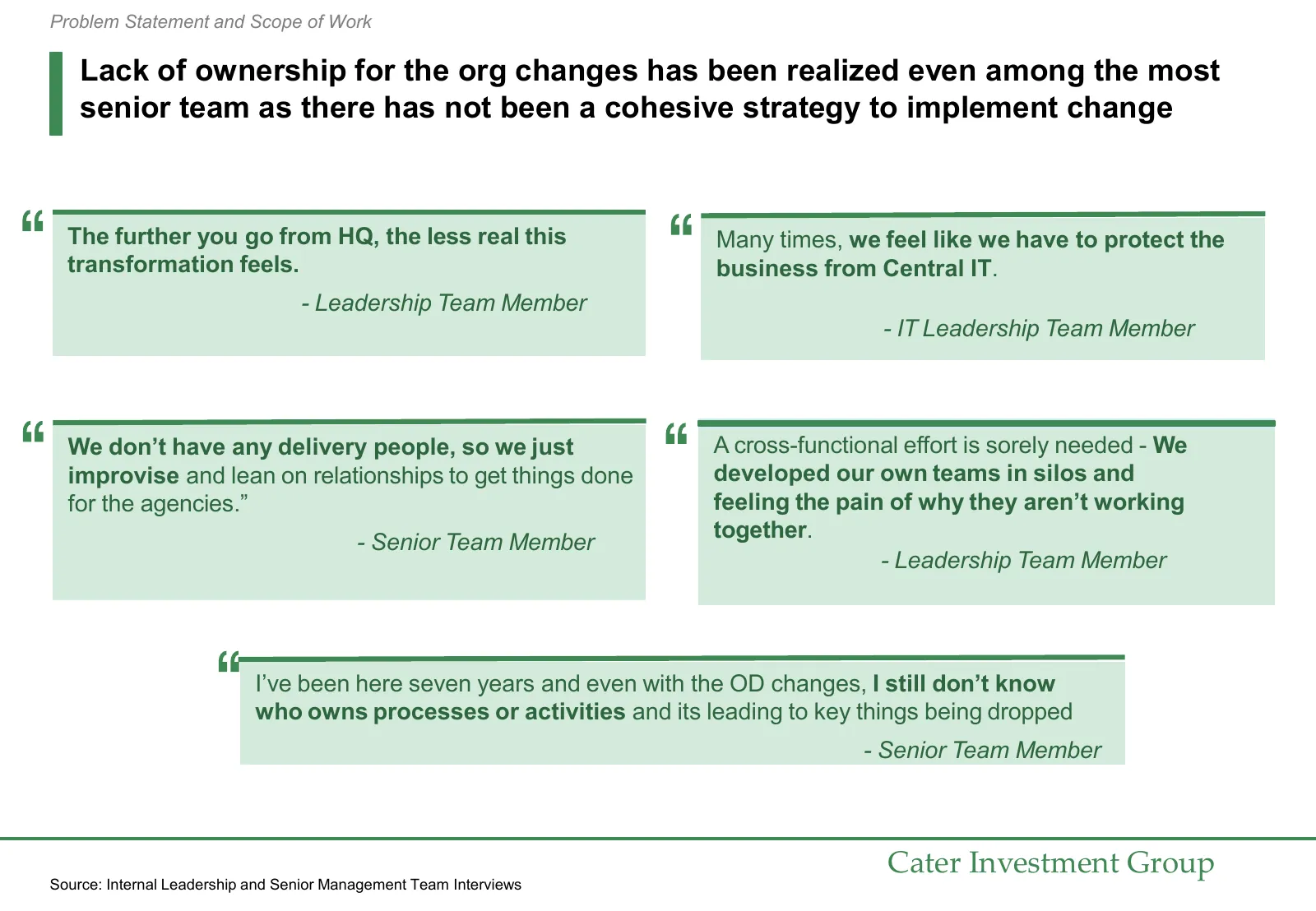

A global IT organization had adopted a centralized-matrix organizational design. On paper, it promised economies of scale. In practice, it never took hold. Internal communication was poor, there was no cohesive strategy for the change, and the further people sat from headquarters, the less real the transformation felt.
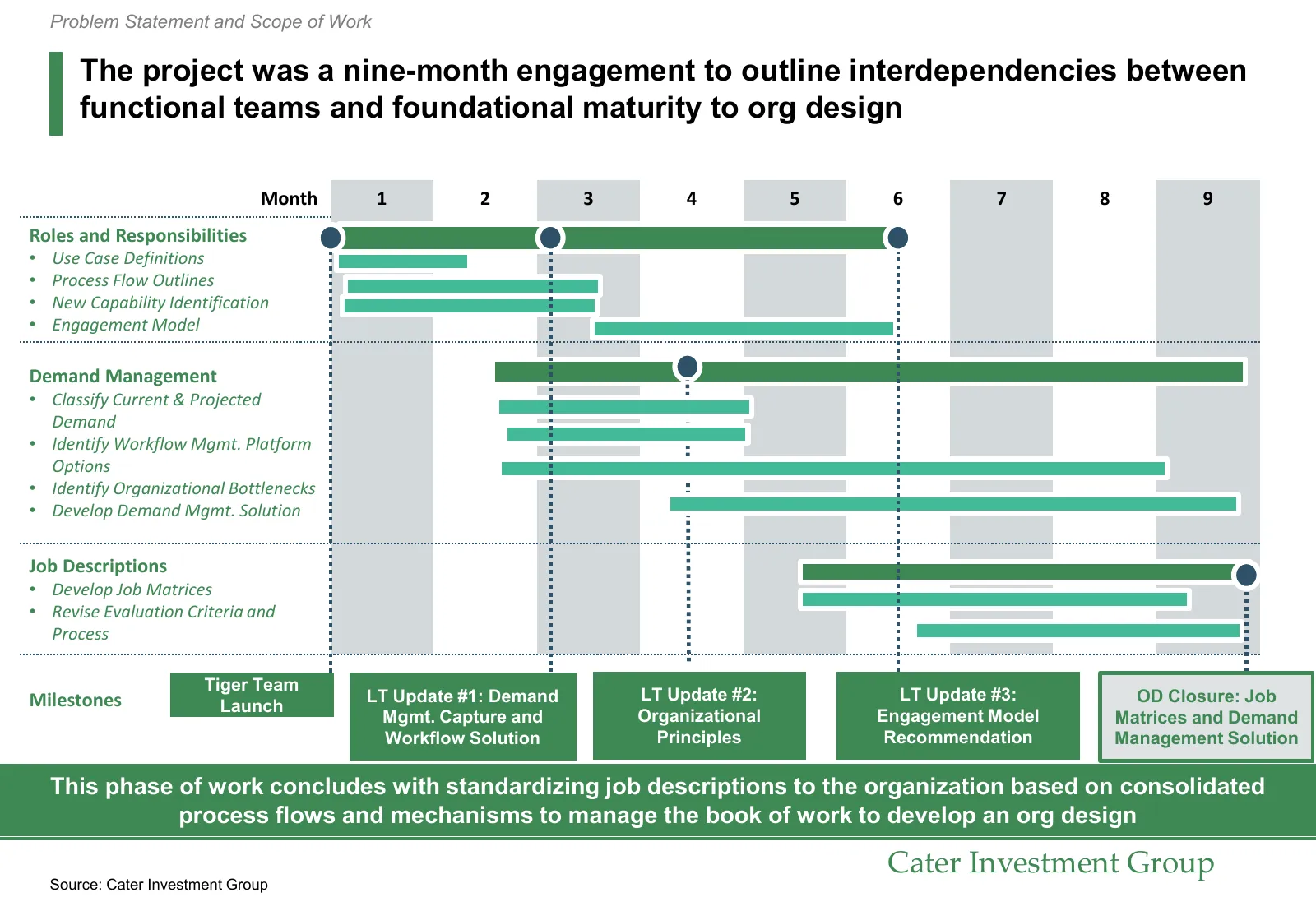
CIG was brought in by the organization's global IT people director for a nine-month engagement to make the design work. This white paper shares what we found and what we delivered.
What we found
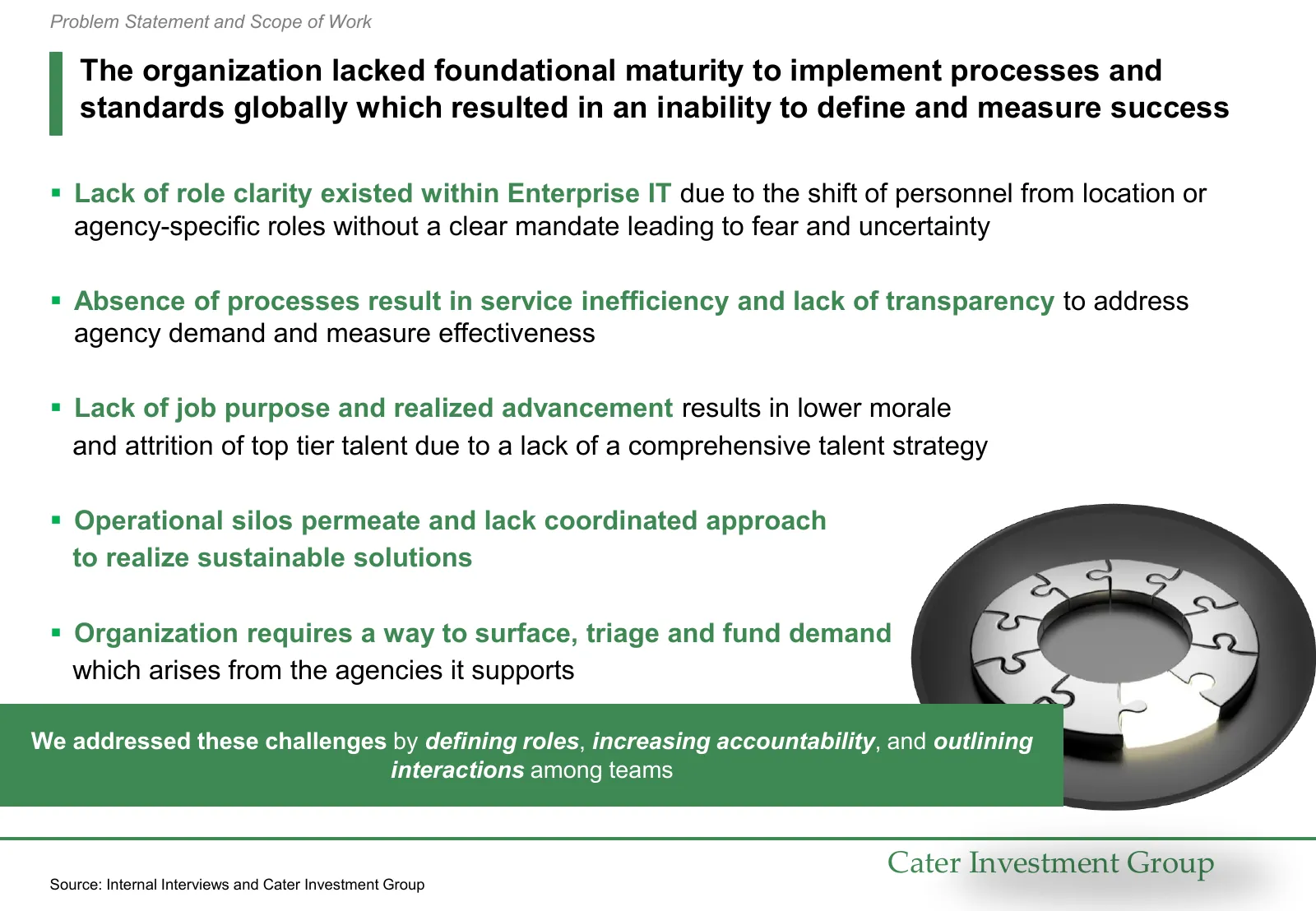
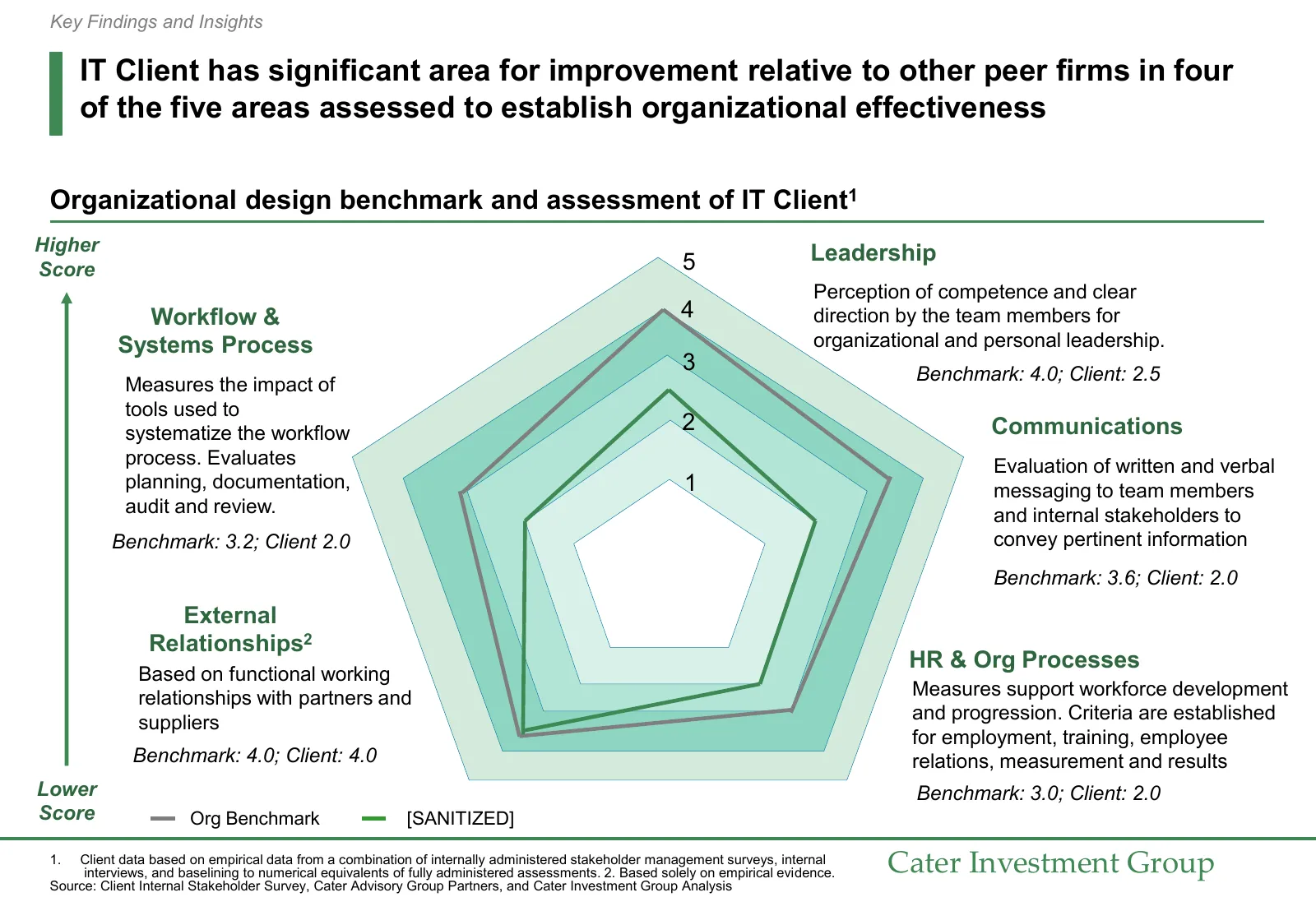
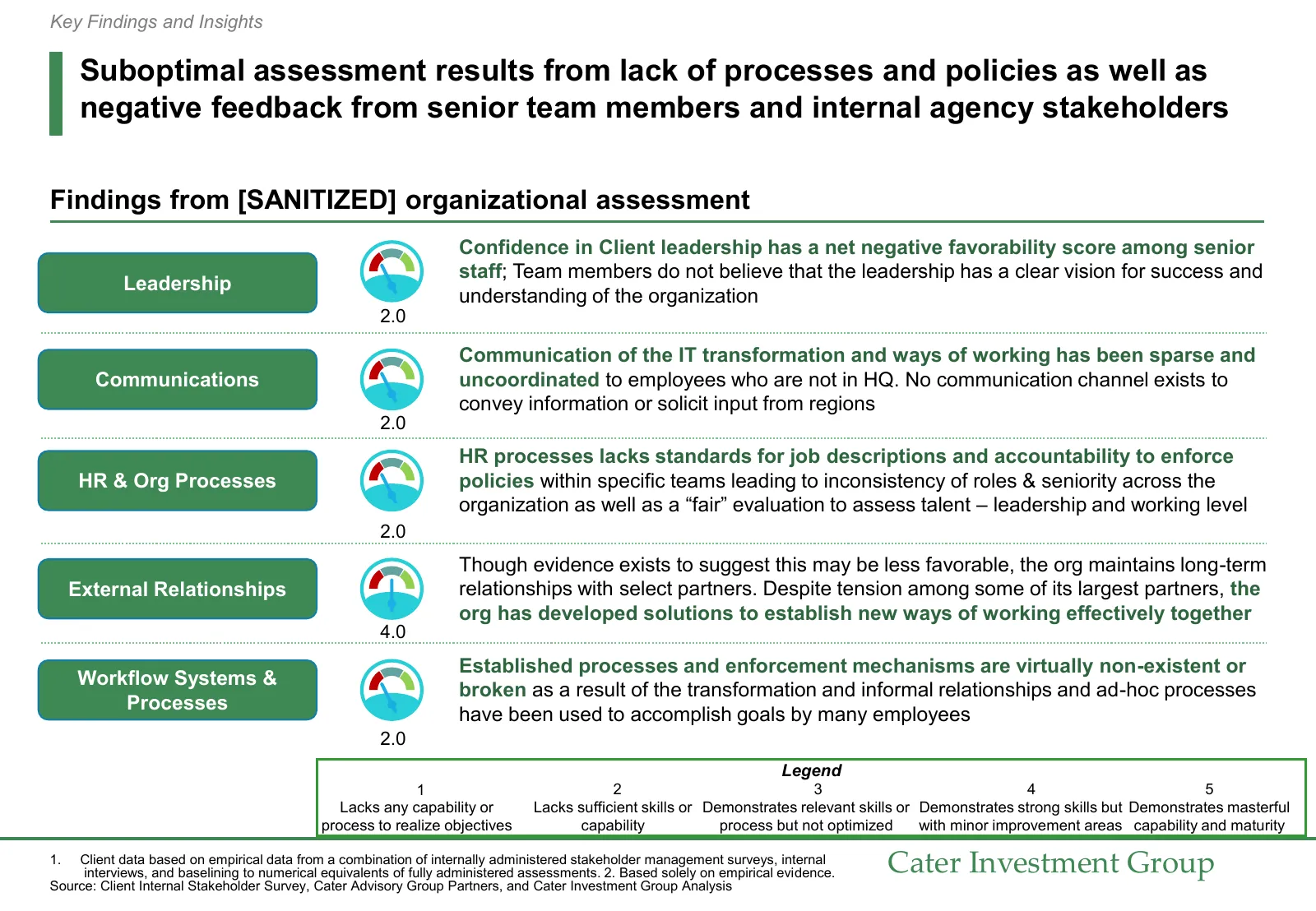
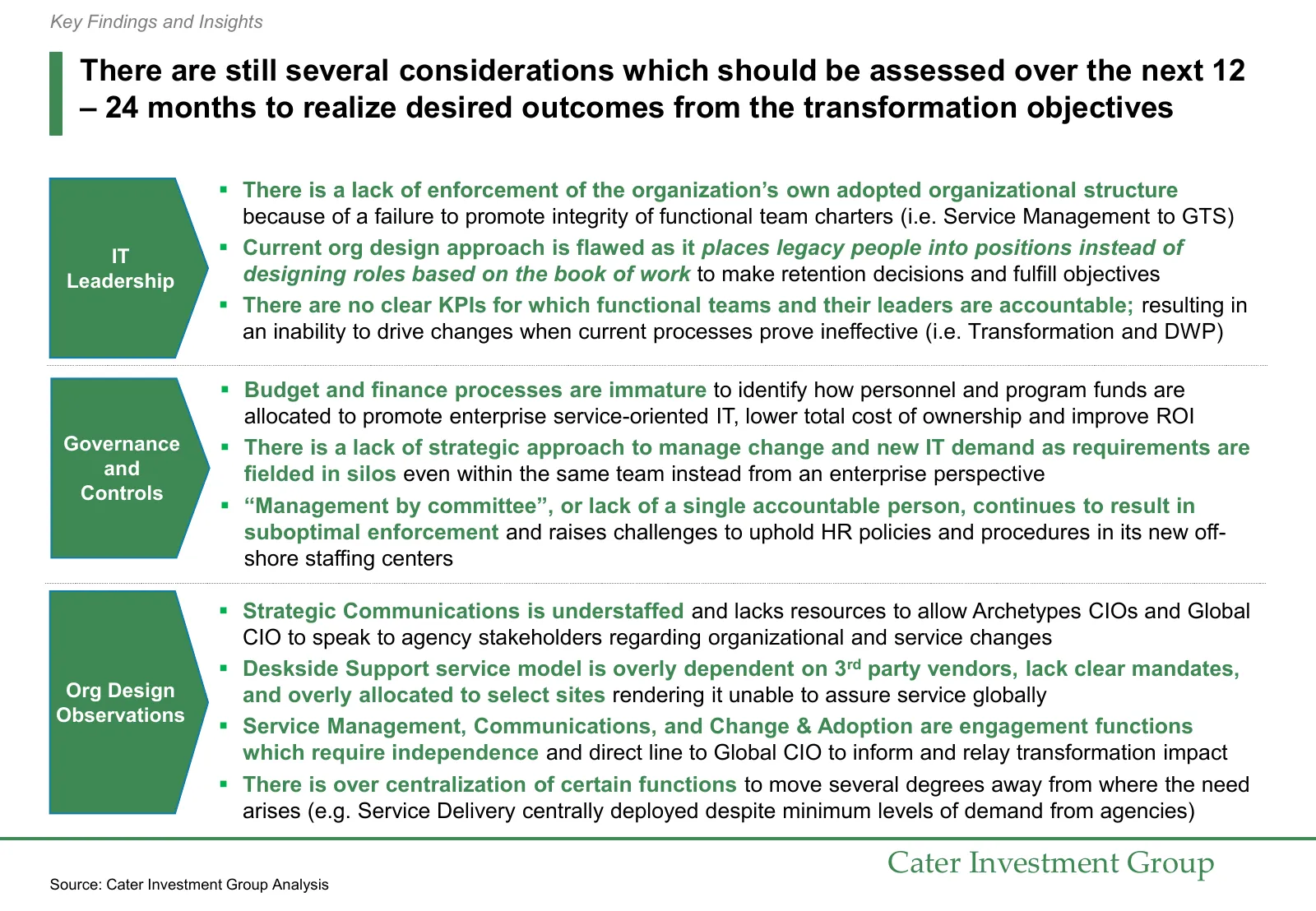
The organization lacked the foundational maturity to run processes and standards globally, so it couldn't define or measure success:
- Roles were unclear after people moved out of location-specific jobs without a clear mandate, which created fear and uncertainty.
- Missing processes made service inefficient and left no way to measure effectiveness.
- Without a talent strategy, people couldn't see a path to advance, and top talent was leaving.
- Teams worked in silos, and there was no way to surface, triage and fund the demand coming from the groups they supported.
What we recommended
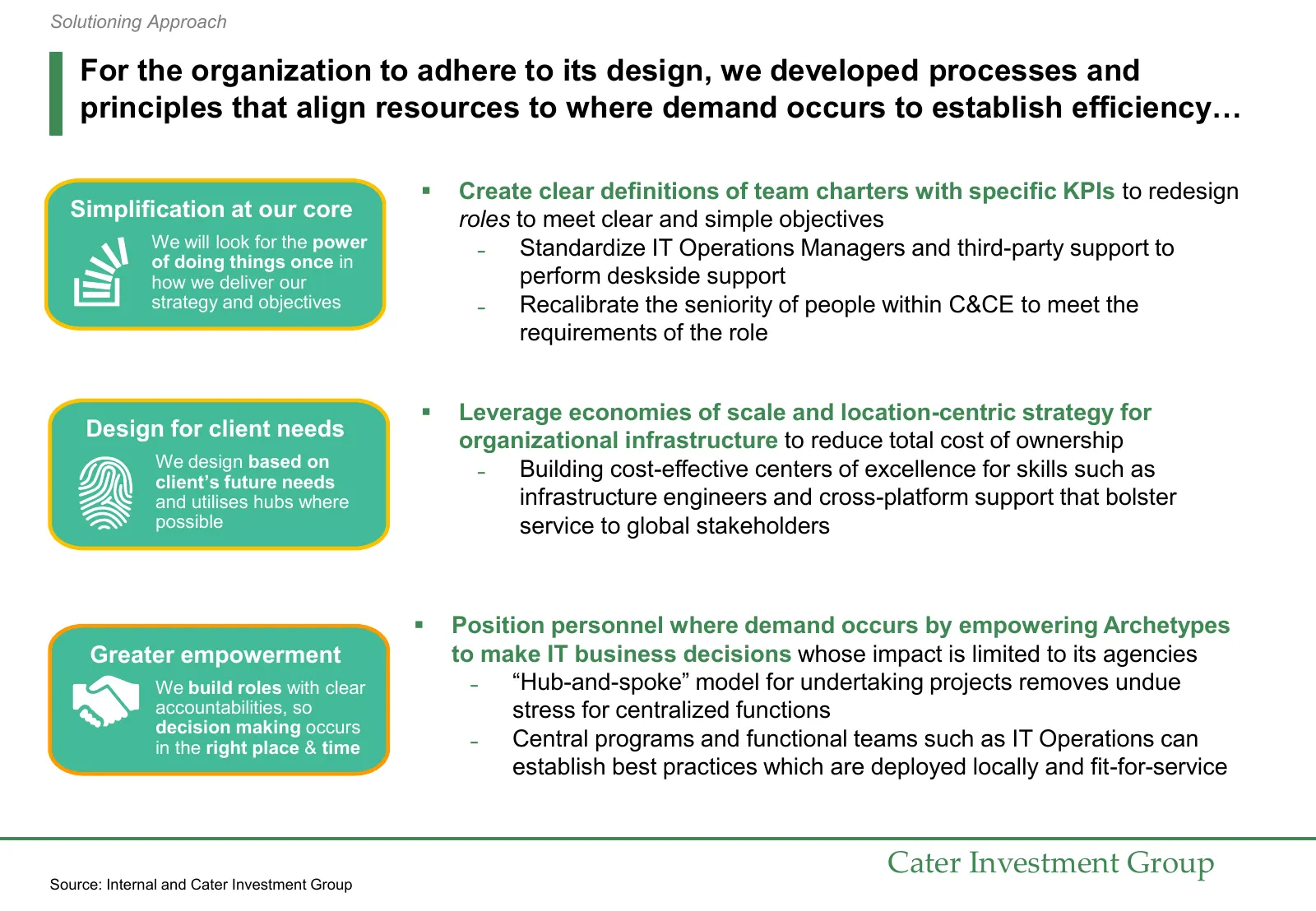
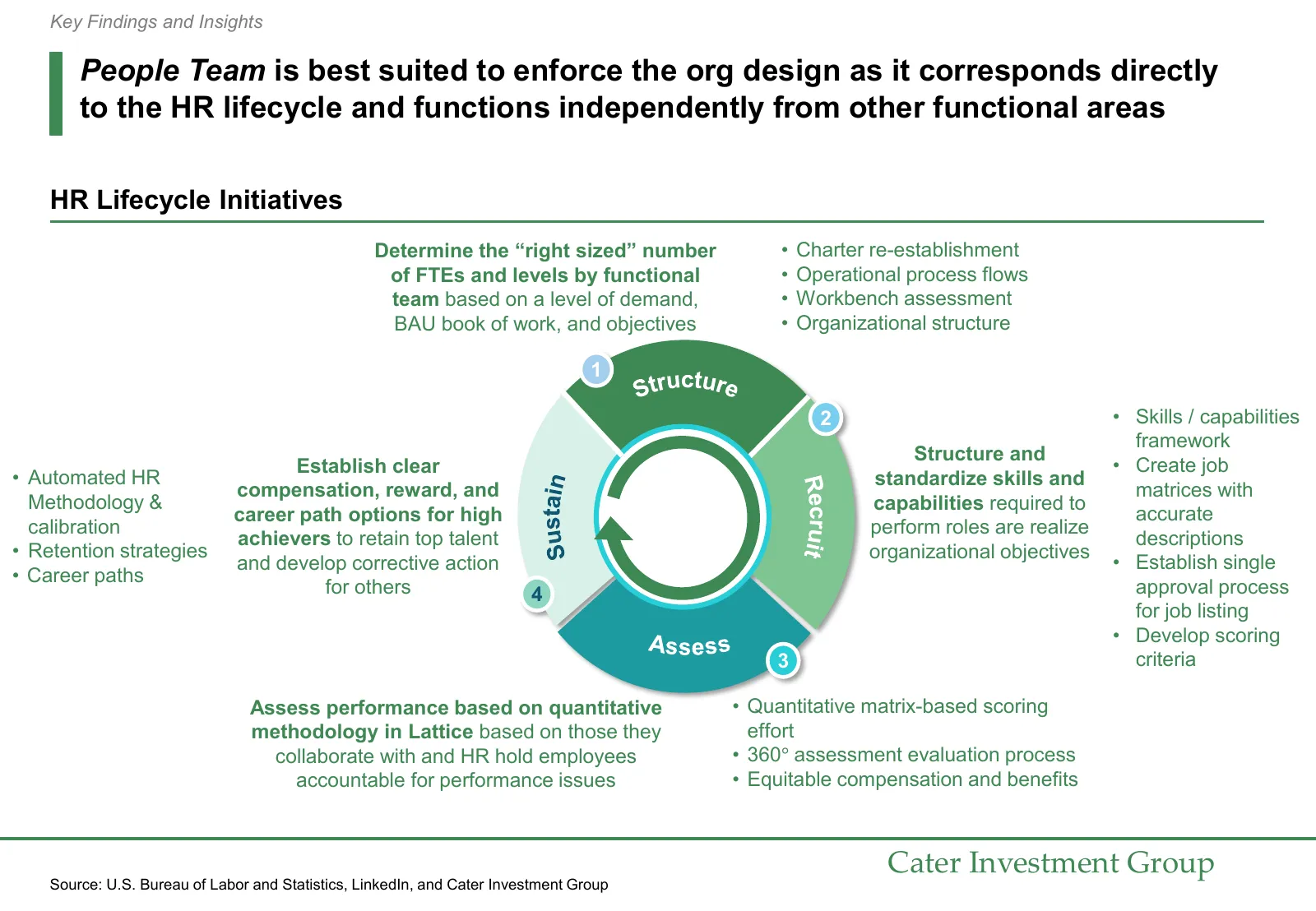
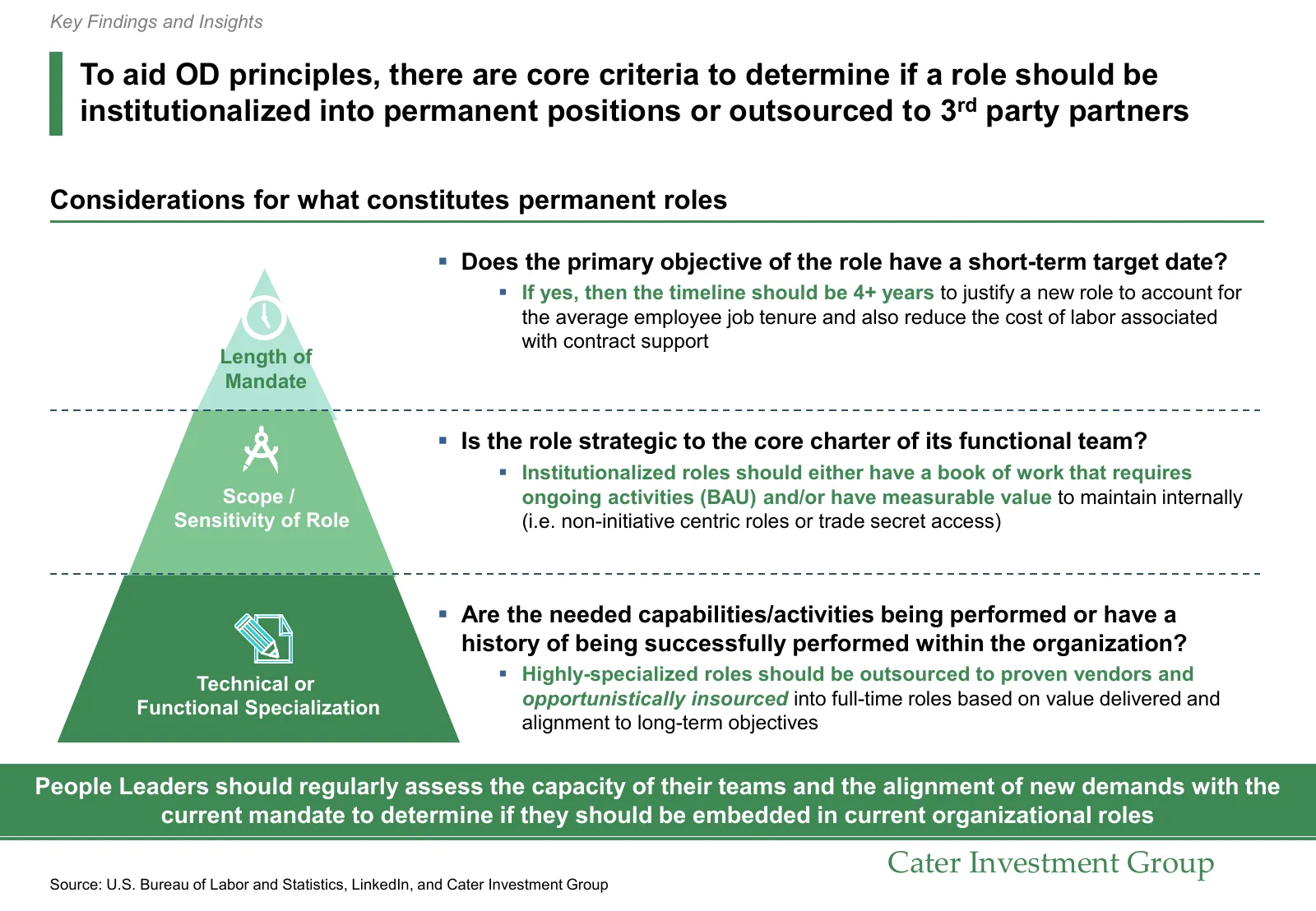
Governance. Create a design authority to review and approve organizational changes, give every functional team charters with clear KPIs, give Finance guidance and controls for budgeting and spending, and standardize HR role descriptions and seniority so roles, pay and retention line up.
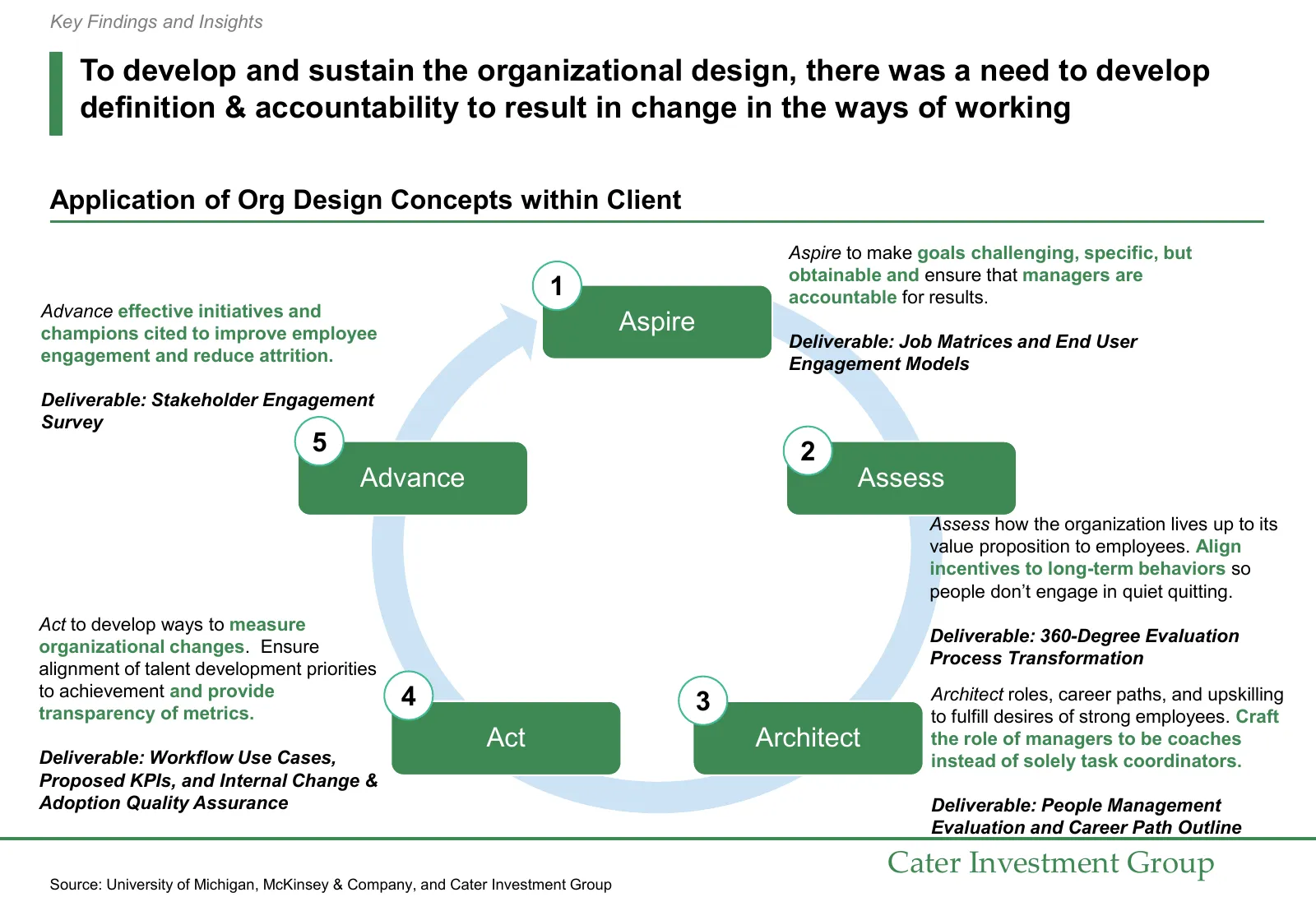
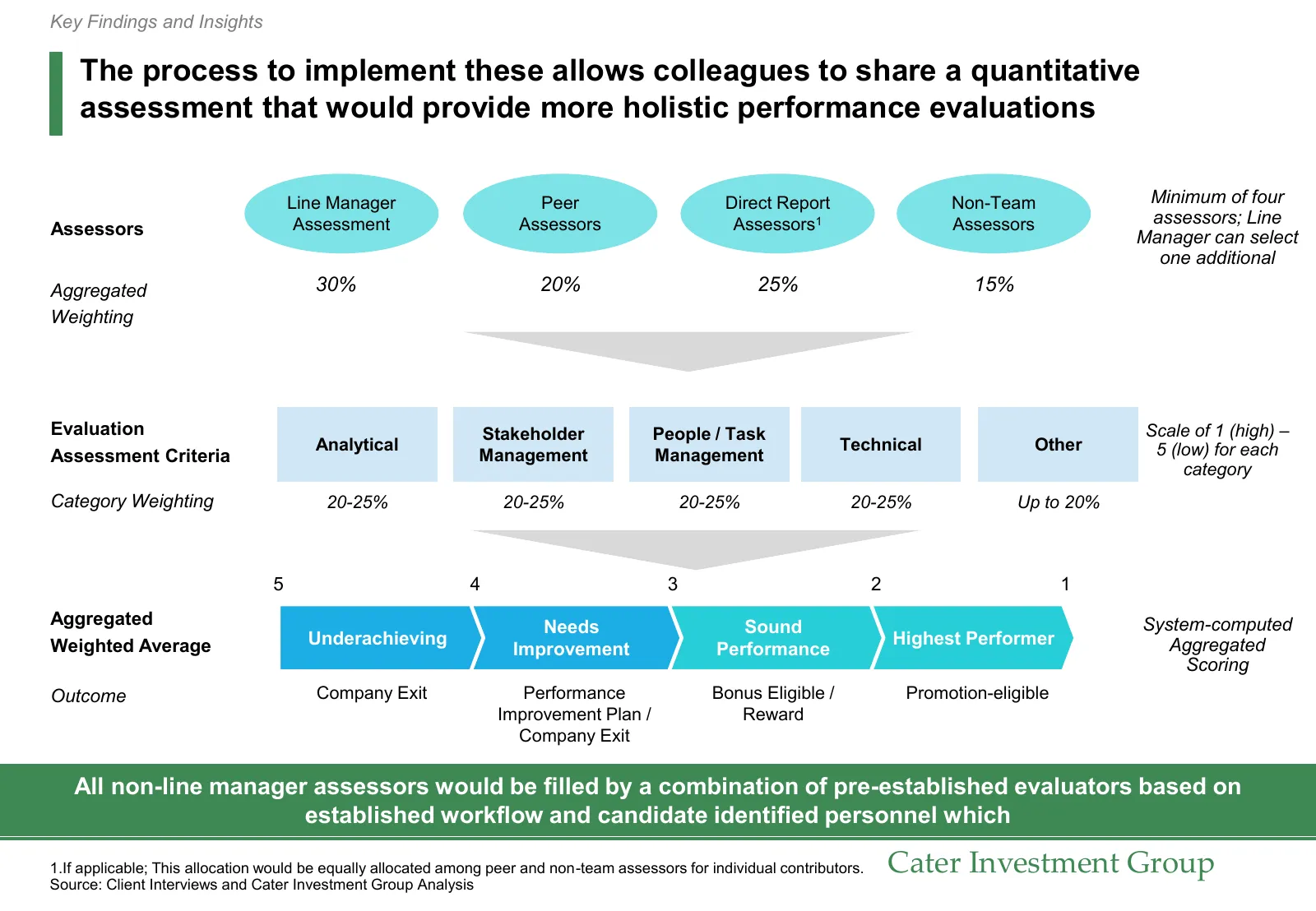
Organizational design. Build a way to track leadership performance against stated objectives, baseline service levels with a voice-of-customer survey, set out a clear engagement model for who identifies, funds and communicates change, and put the most basic processes and controls in place so work hands off cleanly across the matrix.
What we delivered
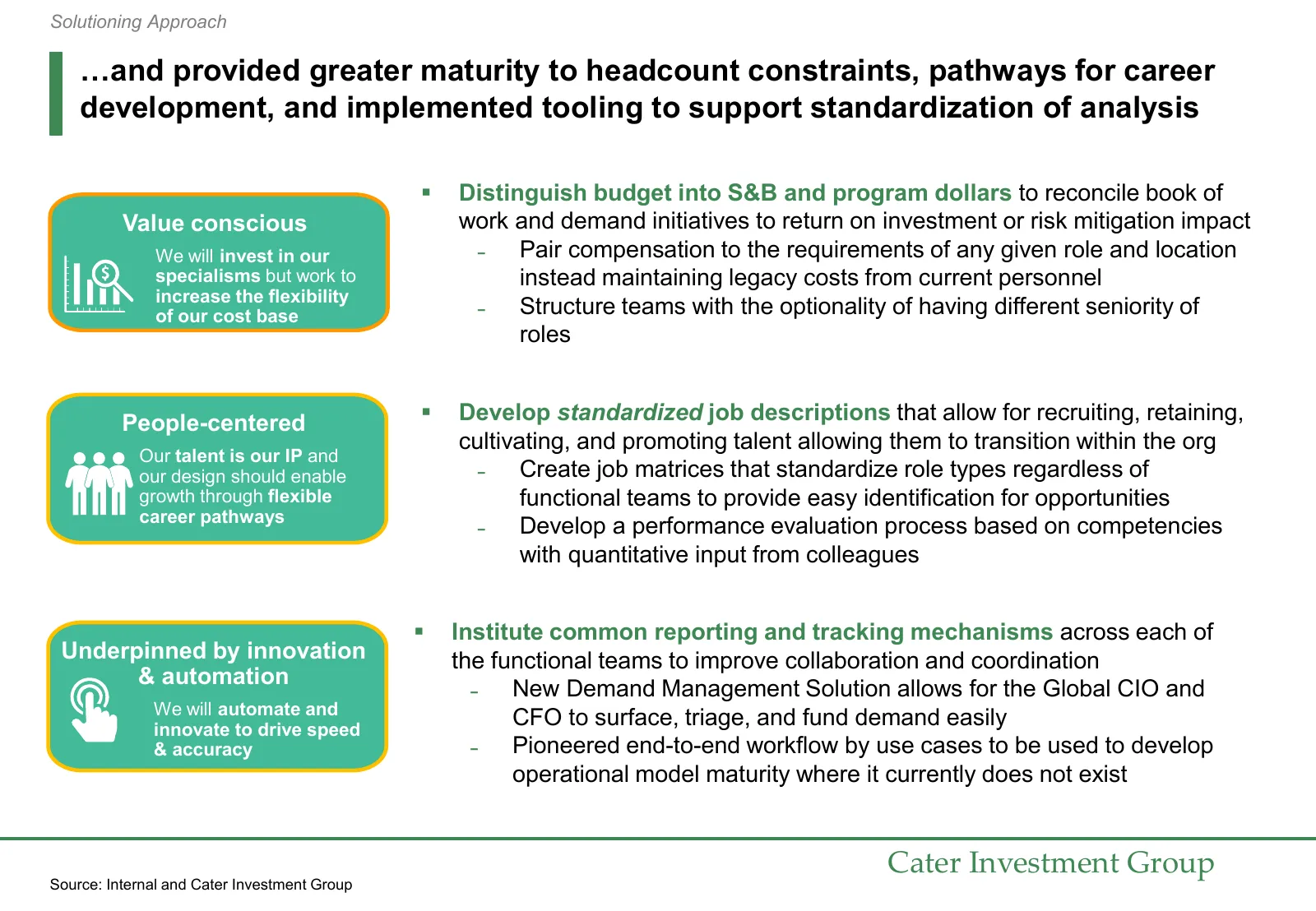
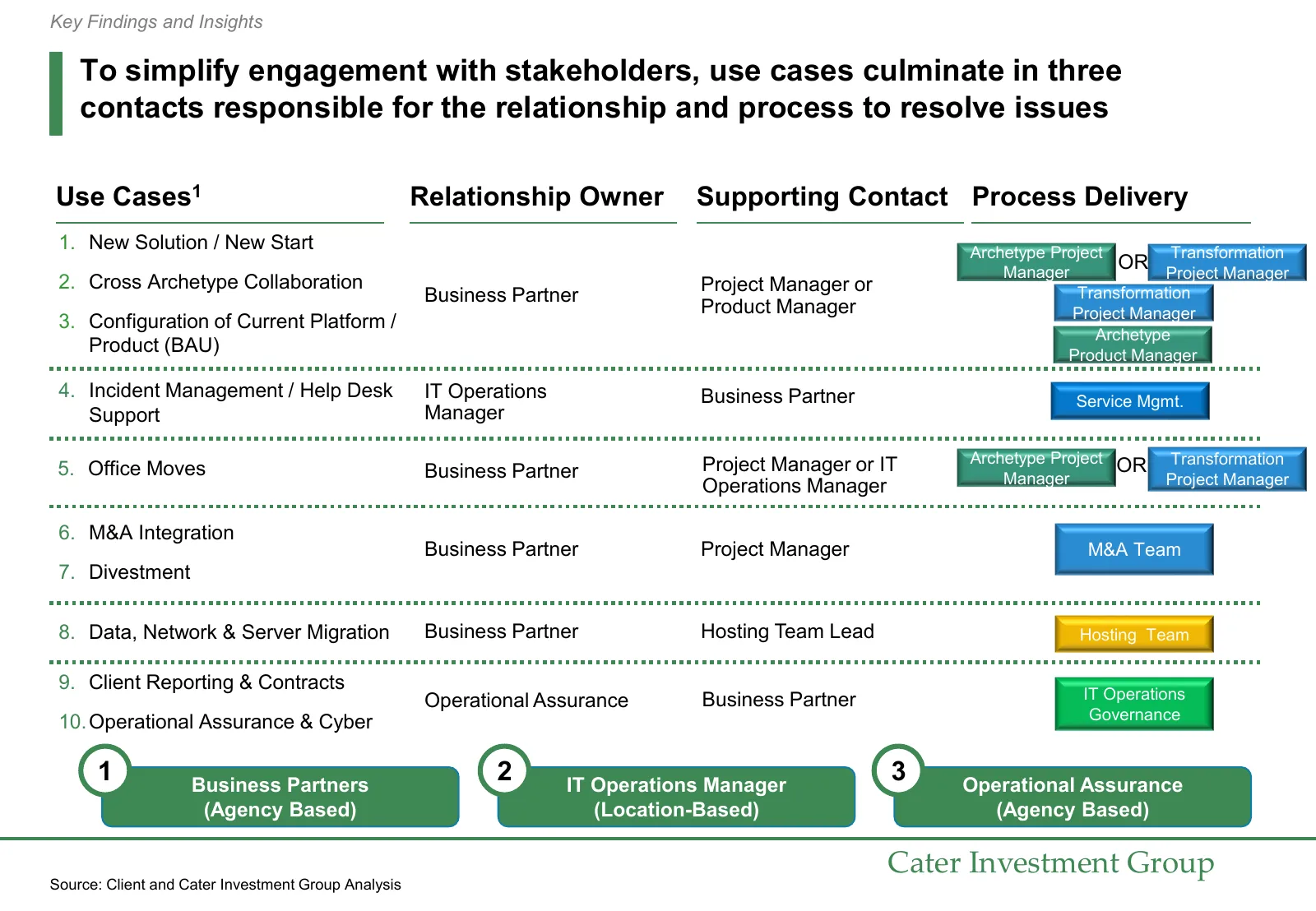
- Demand management and workflow definition: the organization's first comprehensive demand analysis, a consolidated tooling platform, and use cases, RACIs and coordination protocols for managing work.
- User engagement model and service strategy: a stakeholder engagement process, an engagement survey, and an operational assurance role with coordination forums that feed IT governance.
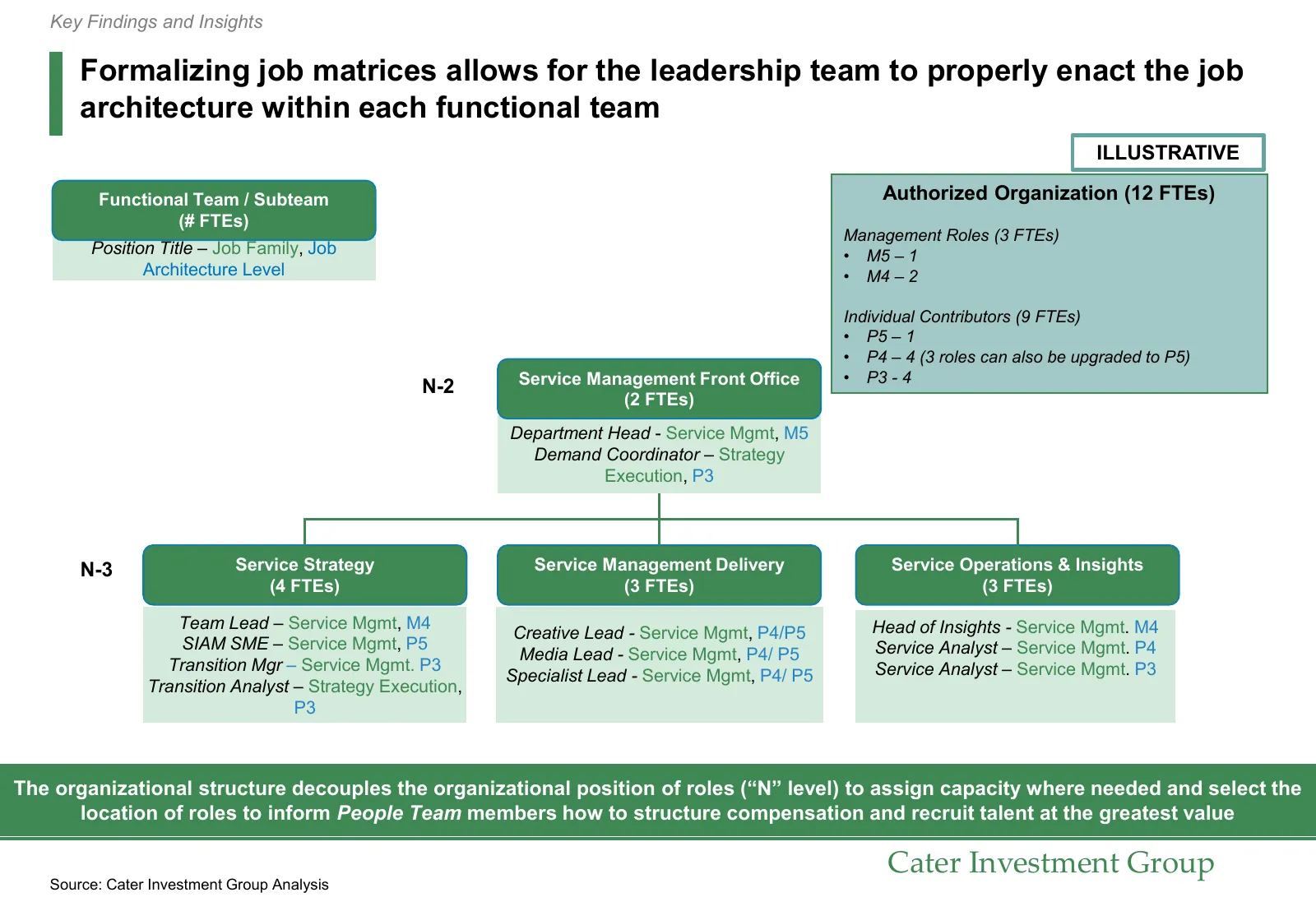
- A comprehensive job matrix library: job matrices and role descriptions that set seniority and shape the org design, adopted by more than 15 teams for new hires and evaluations.
Every solution was practical enough for the client to run on its own, and grounded in measures that show whether it's working.
The full white paper includes the findings in detail and our after-action review.